As UNESCO Cities of Design with distinct cultural backgrounds, natural environments, and industries, Asahikawa and Doha came together to launch the Green Humanitarian Design Competition on November 5, 2025. The competition aimed to address social challenges through the power of design under the theme “A Future Without Reliance on Plastics.”
A large number of ambitious proposals were submitted from both cities, resulting in a diverse and high-quality collection of work. These entries explored a wide range of approaches, including material science and technology, social systems, products, spaces, as well as concepts and modes of expression.
We are pleased to announce that the First Place and Runner-Up have been selected. Details regarding the submissions, the evaluation process, and the results are presented below.
Applications & Submissions
(1)Number of Applications Received
・Asahikawa: 17 ・Doha: 69
(2)Number of Works Submitted
・Asahikawa: 13 ・Doha: 14
Evaluation Process
(1) First Round of Screening: February 18, 2026
Number of entries shortlisted: 5 from Asahikawa, 5 from Doha
(2) Second Round of Screening: Conducted online
Asahikawa Winners
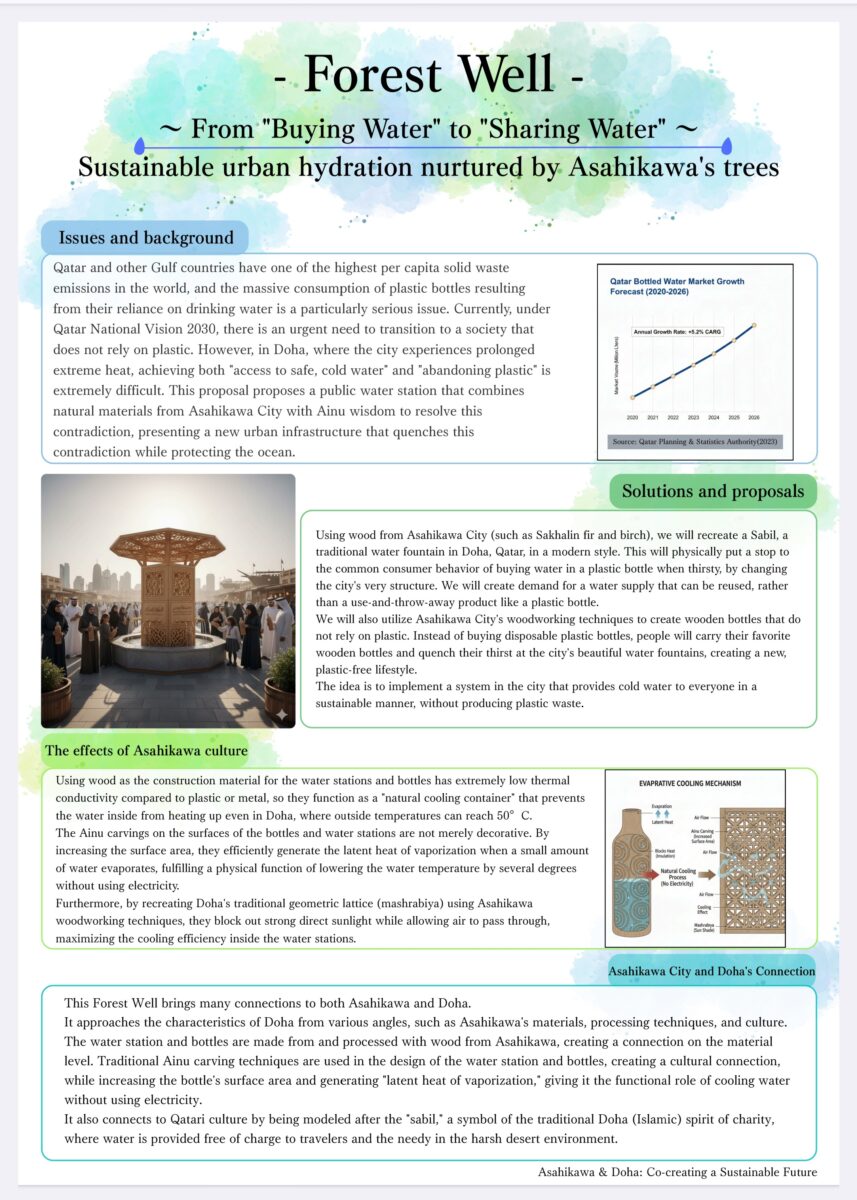
First Prize: Forest Well
by Harumichi Sugawara from Asahikawa City University
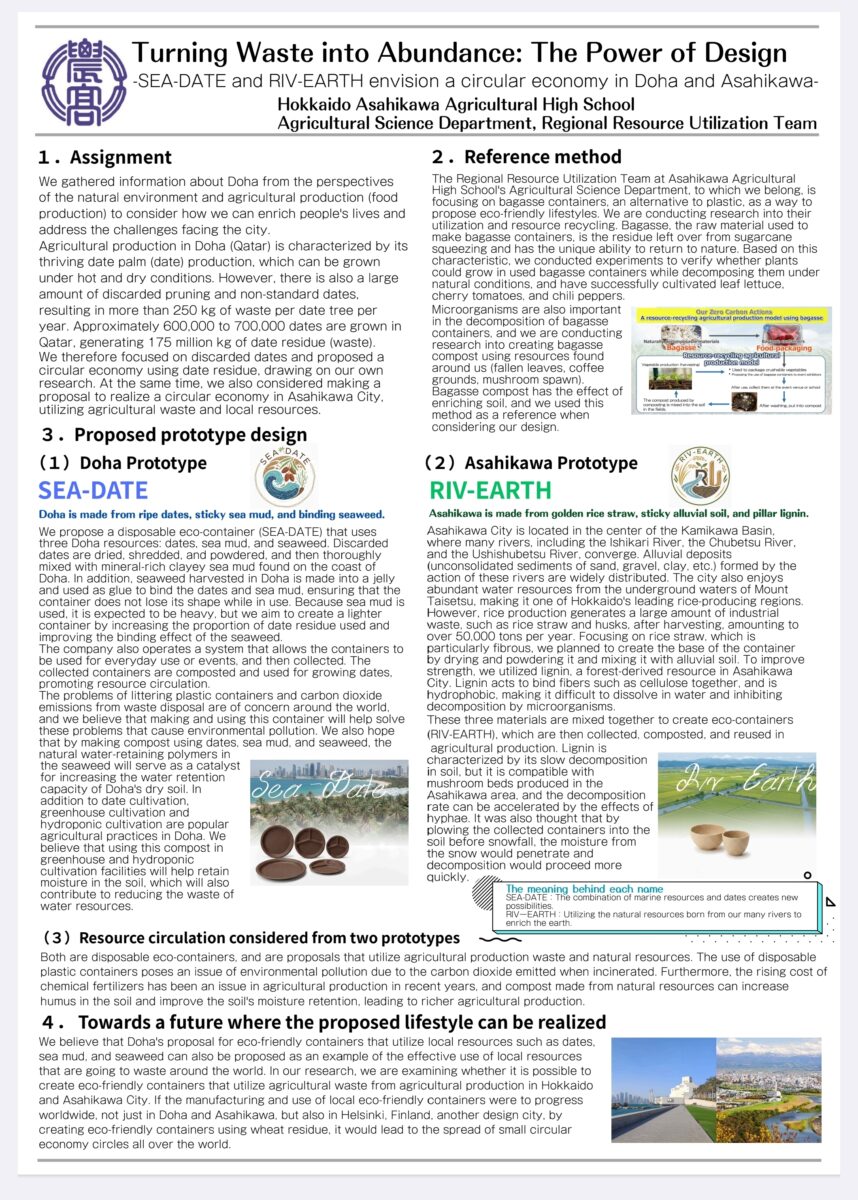
Runner-up: Turning Waste into Abundance: The Power of Design
by Akito Fujiwara from Asahikawa Agricultural High School
Doha Winners
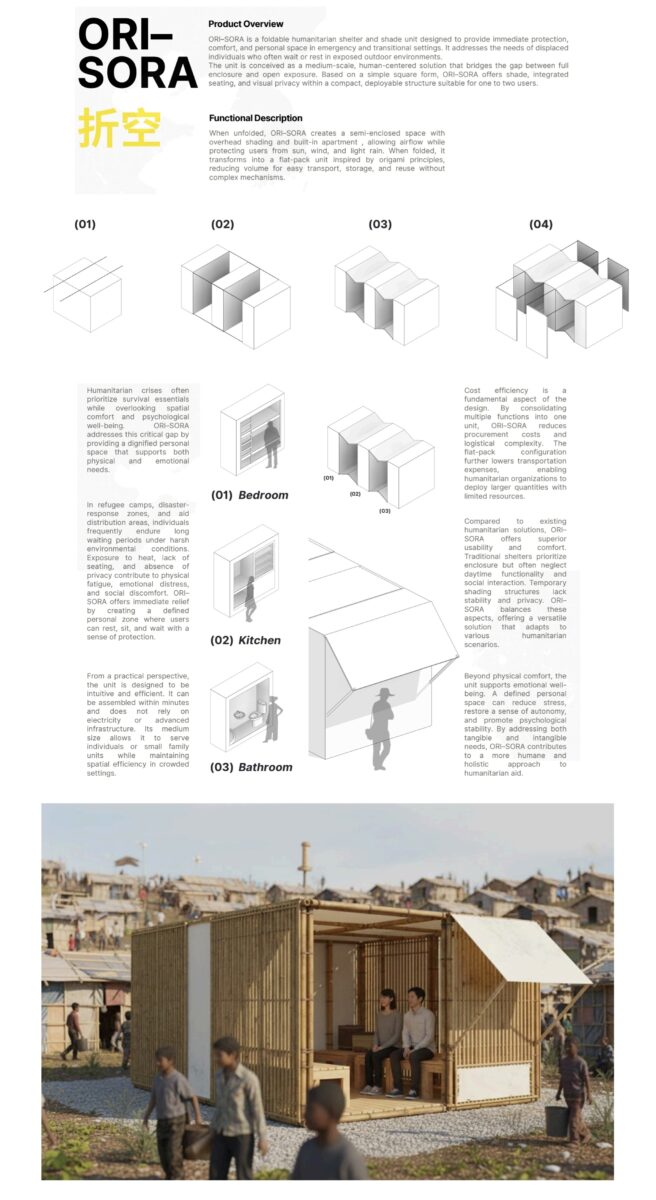
First Prize: ORI-SORA
by Noora Al Emadi from Qatar University
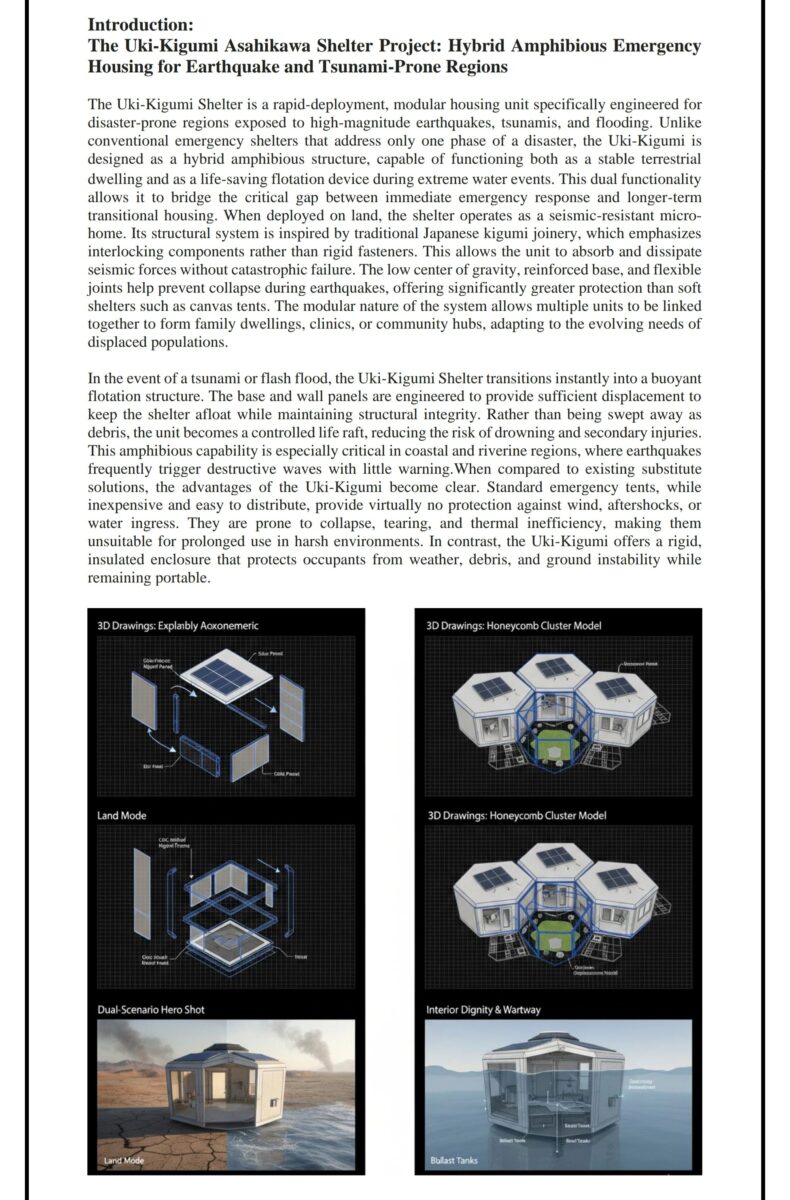
Runner-up: Uki-Kigumi Asahikawa Shelter Project
by Reem Khan
Overall Remarks
A wide variety of highly accomplished proposals were submitted in response to the theme, “A Future Without Reliance on Plastics.” The entries can be broadly categorized into several approaches:
・Solutions through material science and technology
・Design of social systems and services
・Product and spatial design
・Sparking awareness through concept and expression
Each approach addressed the issue from a distinct perspective.
The following three points were particularly highly evaluated:
1) Perspective of intercity collaboration
Many proposals connected Asahikawa’s culture and technologies in forestry, woodworking, and craft with Doha’s desert, maritime environment, and cultural context. Rather than focusing solely on local issues, a number of works stood out for their global perspective.
2) High level of feasibility
Numerous proposals went beyond abstract ideas, presenting concrete mechanisms and operational methods. This resulted in well-developed concepts with clear consideration of practical implementation.
3) Approaching the root of the problem
Many entries moved beyond simply replacing materials, instead re-examining consumption behaviors and underlying social structures. This demonstrated a notably deep understanding of the theme.
Moving Forward
During Asahikawa Design Week, scheduled to be held from June 18 to 21, 2026, the First Prize winner from Doha, along with two representatives from Qatar Museums, are expected to visit Asahikawa. An exhibition will be held at Asahikawa Station during the event period, and we highly recommend dropping by to view the works on display.